


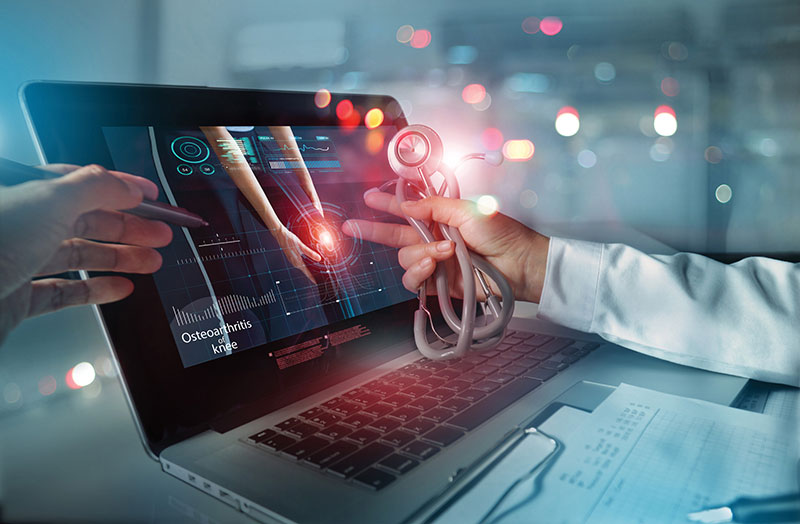
The rapid advancement of 5G technology is revolutionizing the healthcare industry, paving the way for more efficient, remote, and personalized patient care. As connectivity becomes more integral to health services, understanding the capabilities and implications of 5G is essential for clinicians, administrators, and technology providers. From real-time data transmission to enhanced security measures, 5G is shaping a new era in medical innovation, promising improved outcomes and streamlined operations across the entire healthcare ecosystem.
Advanced Features of 5G in Connected Health
Wireless communication technologies, particularly 5G, are accelerating the shift toward remote healthcare delivery, as evidenced by a Medical Device Innovation Consortium (MDIC) study. This transition not only reduces costs by moving treatment closer to patients’ homes but also increases patient satisfaction through faster, more reliable services. 5G’s improvements extend beyond mere speed enhancements; they support cutting-edge applications such as augmented reality (AR) and virtual reality (VR) for remote surgeries, real-time patient monitoring, and emergency response systems like ambulance telemedicine. Paramedics, for instance, can securely access critical medical records on the spot, enabling more informed decision-making and saving lives.
The evolution of 5G introduces innovations like Reduced Capability (RedCap), a technology designed to bridge the gap between 4G LTE and full 5G, especially for Internet of Medical Things (IoMT) applications. This technology offers a balance of speed, security, and power efficiency, making it ideal for devices that only require moderate data transfer rates, such as wearable health monitors. For example, a glucose monitoring device can transmit vital signs in real time to healthcare providers, ensuring continuous patient oversight without the need for high bandwidth.
RedCap: A New Class of 5G
RedCap, or 5G NR-Light, addresses the limitations of earlier wireless standards by providing a mid-range solution suitable for many IoT healthcare devices. It enables a seamless transition from 4G LTE to 5G networks while maintaining full security and reliability. This development is critical as most cellular IoT devices are scheduled to migrate to 5G by 2030, ensuring their compatibility with emerging standards.
Telit Cinterion has launched first-generation RedCap modules leveraging Qualcomm’s Snapdragon® X35 5G Modem-RF System. These modules feature global coverage and come with an eSIM for easy deployment across different regions. They support fallback to 4G LTE in areas where 5G is unavailable and feature enhanced uplink performance for data-heavy applications like video uploads from medical devices. Wearable health monitors, such as continuous glucose sensors, benefit from this technology by providing reliable, real-time data transmission that is both affordable and energy-efficient.
Advanced 5G Network Slicing in Health Care
As healthcare services grow more complex and specialized, managing network resources efficiently becomes crucial. 5G network slicing allows the creation of multiple virtual networks within a single physical infrastructure, each tailored to specific applications or user needs. This capability ensures that critical health care operations—such as emergency response, tele-surgery, or remote diagnostics—receive guaranteed quality of service (QoS) and sufficient bandwidth.
For example, in emergency scenarios involving multiple ambulances and drone deliveries of blood supplies, network slices can be rapidly configured to prioritize vital communications and data transfer. This flexibility not only enhances response times but also ensures the security and integrity of sensitive health information. By 2028, the worldwide market for 5G network slicing is projected to reach approximately $5.3 billion, emphasizing its growing importance in healthcare.
Four Stages of 5G Slicing in Healthcare Networks
The deployment of 5G slices in healthcare encompasses four key components:
- Mobile Devices: Smartphones, tablets, and specialized health monitors that require prioritized data channels.
- 5G Radio Access Network (RAN): The physical infrastructure, including antennas and base stations, supporting wireless connections.
- 5G Core: The virtual functions managing device authentication, mobility, and network slicing.
- Healthcare Backend: Systems such as electronic medical records (EMR) and hospital information systems that process and store patient data.
Each stage involves resource allocation based on clinical priorities, ensuring that vital services like emergency alerts and remote surgeries operate without interruption. For instance, during a mass casualty event, network slices can be quickly allocated to support ambulance communications, drone deliveries, and tele-robotic surgeries, all with guaranteed security and low latency.
Interesting:
Healthcare Cybersecurity Challenges
The increasing reliance on digital and wireless solutions exposes healthcare organizations to a growing number of cyber threats. Reports indicate that nearly 66% of cyber incidents over the past decade have occurred within the last three years, with ransomware attacks being particularly prevalent. 5G’s inherent security features—such as built-in encryption and network slicing—provide significant advantages over previous generations. Nonetheless, virtual networks and private slices introduce new vulnerabilities, necessitating careful planning and robust security protocols.
Monitoring tools leveraging AI and machine learning can enhance threat detection in 5G networks, protecting sensitive patient data and maintaining compliance with regulations like HIPAA. For example, the first mobile 5G hospital network in Germany, developed by the 6G Health Institute and Telefonica, demonstrates how advanced security measures can safeguard critical health infrastructure while enabling seamless connectivity during patient transfers and hospital stays.
6G Health Institute and Telefonica Create the First Mobile 5G Hospital Network
In a pioneering effort, Germany’s 6G Health Institute partnered with Telit Cinterion and Telefonica to establish a mobile 5G hospital network on their campus. This innovative setup integrates 5G slicing and reliable mobile broadband, enabling uninterrupted connectivity from ambulances outside the hospital to in-hospital systems and patients’ homes. The network supports real-time data exchange, remote diagnostics, and continuous patient monitoring, showcasing 5G’s transformative potential in healthcare delivery. Such developments highlight the importance of reliable, high-speed networks in ensuring timely and effective medical interventions.
Security Advantages of 5G
The deployment of private 5G networks and network slicing brings numerous benefits to healthcare providers, including:
- Lower latency: Ensures rapid data transmission, critical for life-saving applications.
- Enhanced reliability: Provides consistent connectivity, reducing operational vulnerabilities.
- Advanced threat detection: AI-powered security tools can identify anomalies in real time.
- Regulatory compliance: Supports adherence to data protection laws such as HIPAA.
These benefits collectively help safeguard sensitive health data while enabling innovative services that improve patient outcomes.
Service Level Agreements (SLA) in 5G-Enabled Healthcare
Standard SLAs are insufficient for the dynamic and resource-intensive nature of 5G-based healthcare systems. The FCC and regulatory bodies emphasize the need for customized, flexible agreements that account for network slicing and ultralow latency. Each virtual slice can be assigned specific performance parameters aligned with its application—whether it’s remote surgery or routine monitoring—ensuring optimal resource utilization and security. Transitioning from static to adaptive SLAs is essential to support the rapid evolution of healthcare technology and maintain operational excellence.
Leading Innovation in 5G for Healthcare
Telit Cinterion stands at the forefront of 5G deployment, offering secure, reliable modules that facilitate the evolution from LTE to advanced 5G solutions. Their participation in the development of RedCap standards underscores their commitment to future-proofing healthcare IoT devices. By providing flexible modules with global coverage and secure connectivity, Telit Cinterion enables healthcare providers to implement sophisticated applications that meet evolving regulatory and operational demands.
Key Takeaways
- 5G technology is unlocking new possibilities for connected healthcare through faster, more reliable communication and real-time data sharing.
- Innovations like 5G RedCap fill critical gaps in IoT device capabilities, offering cost-effective solutions for mid-speed data transfer.
- Network slicing ensures secure, prioritized access for emergency services and complex medical applications, enhancing patient safety and operational efficiency.
Explore further details on how the expanding landscape of healthcare networks is shaping future medical services at the comprehensive overview of major healthcare systems.